
|
What shots does my kitten need?
Kittens should receive their first vaccination at 6-8 weeks of age. Vaccinations are repeated at 2-4 week intervals until the kitten is 12-16 weeks old.
The vaccinations are given to protect your cat against the following infectious diseases:
Link to Vaccination Schedule
Distemper (Panleukopenia) a highly contagious viral disease that spreads through air or contact with infected body secretions and causes vomiting, diarrhea, dehydration and can be fatal.
Upper Respiratory Disease (calicivirus, herpesvirus) a number of highly contagious viral respiratory infections causing "cold" symptoms sneezing, coughing, discharge from nose and eyes.
Rabies a fatal viral infection of the central nervous system of mammals including humans. It is spread through the saliva of a rabid animal. In our area, bats and raccoons are the most common carriers of rabies. Rabies vaccinations are given at 3 months of age and are legally required in Albany County.
Feline Leukemia a viral disease that causes immunosuppression, anemia, and tumors of any body system. It is spread through contact with infected saliva and other body fluids. Immunization against leukemia is recommended if your cat goes outdoors and has contact with other cats.
Note: There are no vaccinations that give life long protection. We recommend boosters one year after the initial vaccination and every three years thereafter.
back to top
What shots does my puppy need?
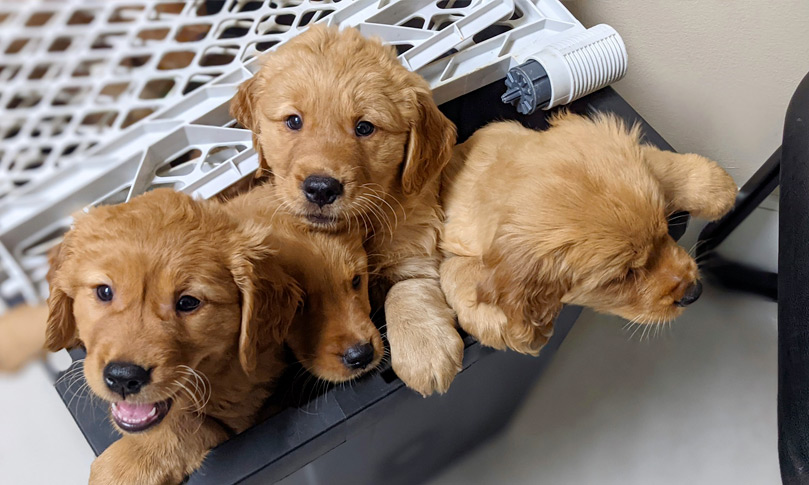
Puppies should receive their first vaccination at 6 to 8 weeks of age. Vaccinations are repeated at 3-4 week intervals until the puppy is 12-16 weeks old.
The vaccinations are given to protect your dog against the following infectious diseases.
Link to Vaccination Schedule
Distemper a highly contagious viral disease that spreads through air-borne secretions and causes respiratory, gastrointestinal, and neurological problems.
Hepatitis a serious viral infection of the liver and blood vessels.
Leptospirosis a bacterial infection of the kidneys spread through contact with urine, saliva or nasal secretions.
Parvovirus a potentially fatal virus that causes vomiting, diarrhea and dehydration. This is a highly contagious disease of young dogs.
Rabies a fatal viral infection of the central nervous system of mammals, including humans. It is spread through the saliva of a rabid animal. In our area, bats and raccoons are the most common carriers of rabies. Rabies vaccinations are given at 3 months of age and are legally required in Albany County.
Note: There are no vaccinations that give life long protection. We recommend boosters one year after the initial vaccination and every three years thereafter.
Kennel Cough (Bordetella) vaccination is recommended for dogs with frequent contact with dogs from varied sources (e.g. kennels, dog shows). This vaccine is usually administered intranasally.
Lyme - A tick borne infection causing arthritis, fever and possibly kidney, heart or neurologic disease. The first lyme vaccine is given in a two shot series, two to three weeks apart. The vaccine is then administered once per year.
back to top
Why should I have my male dog/cat neutered?
We recommend that all mixed breed pets be neutered. Purebred animals that are not being used for breeding or for show should also be neutered. Neutering a male dog or cat involves surgical removal of the testicles. The primary benefit of neutering your pet is to eliminate their ability to get a female dog or cat pregnant. There are also medical and behavioral benefits including:
- Roaming Males will often wander off looking for or chasing after females in heat. While neutering your male pet may not completely eliminate this behavior, it will remove the hormonal urges to roam.
- Fighting/aggression Testosterone, the male sex hormone, increases a dog's tendency to fight with other dogs and show other forms of aggression. Most of the testosterone is formed in the testes, so having your dog neutered will greatly decrease circulating levels of testosterone. Unfortunately, not all aggressive behavior is due to testosterone, but neutering often helps decrease the incidence.
- Anal adenomas - Older, uncastrated male dogs often develop these tumors near the anus. These tumors are stimulated to form by testosterone.
- Prostatic disease Older, uncastrated male dogs often develop an enlarged prostate. As the prostate enlarges, it often puts pressure on the colon and rectum, causing straining and difficulty during defecation. An enlarged prostate also predisposes dogs to develop prostatic infections. Prostatitis leads to bloody urine and difficult or painful urination.
Neutering your dog at a young age will prevent prostatic enlargement and anal adenomas. The good news is that even if your dog has already developed an enlarged prostate, neutering will cause the prostate to shrink and can prevent reoccurrence of anal adenomas.
- Feline urine spraying Uncastrated male cats will almost always start spraying urine as they reach sexual maturity (8-10 mos. old). Neutering a male cat prior to the start of spraying behavior should keep them from developing the habit of spraying, neutering will not always make them stop. Unfortunately, there are other causes of feline urine spraying, but this is the easiest one to prevent.
back to top
Why should I have my female dog/cat spayed?
We recommend that all mixed breed pets be spayed. Purebred animals that are not being used for breeding or for show should also be spayed. Spaying a female dog or cat involves the surgical removal of the uterus and ovaries. The primary benefit to spaying your pet is to eliminate their ability to have puppies or kittens. Other benefits include prevention or elimination of the following diseases:
- Pyometra Infection of the uterus that can occur at any age and is often life threatening.
- Mammary (breast) cancer spaying a dog prior to her first heat decreases her risk of cancer by 90% or more.
We recommend spaying dogs and cats at 6 months of age. However, if you have an older pet, it is still a good idea to get her spayed to prevent pyometra and other reproductive tract diseases.
back to top
Is my pet too fat?
Obesity can increase your pet's chances of developing a number of diseases (i.e. diabetes) and can worsen others (i.e. arthritis). To determine if your pet is overweight, run your hands over their chest and abdomen. You should be able to feel each rib with only a small amount of flesh over them and there should be a recognizable waistline. If you can no longer easily feel the ribs, your pet is overweight. If you can stand back and see your pet's ribs, they are too thin.
If you need help putting your pet on a weight loss program, contact our office.
back to top
I just found a tick on my dog/cat...What should I do?
First, make sure it is a tick and not a small growth. Wet down the fur around the tick and look close to the skin, you should be able to see the tick's legs. Once you have positively identified the tick, it is time to remove it. Grasp the tick with tweezers, as close to the skin as possible, and gently pull backwards until it comes free of the skin. Sometimes all or part of the tick's head will remain embedded in the skin. Leave it alone! Trying to remove it will just increase irritation at the site. Your pet's immune system will take care of it. Expect a bump to be present after the bite for 7-14 days. If you are finding ticks on your pet on a regular basis, contact us for recommendations on tick control.
back to top
Why does my dog have bad breath?
Chances are, if you didn't brush your teeth for five years, you would have bad breath too. When food particles remain on your dog's teeth, bacteria multiply and produce odor-causing plaque and tartar. Over time, this material builds up and causes inflammation of the gums (gingivitis). The small pieces of bone which hold the teeth in the jaw are broken down, and the teeth get loose and fall out. The bacteria in the mouth are a source of infection for the rest of the body, especially the heart.
Bad breath generally indicates dental disease. Brushing your dog's teeth daily may help prevent plaque build-up, but once tartar forms or the tooth is loose, your pet needs a thorough dental cleaning under anesthesia. Small breeds seem to have more problems with their teeth than large breed dogs. This may be because the smaller spaces between their teeth trap more food.
back to top
|